MOZOM-analyse
MOZOM Analyzes: WHO Ebola Bundibugyo, Diagnostic Test or Confidence in Outbreak Control?
- Source
- WHO, UN News, Africa CDC-context en WHO Emergency Use Listing
- MOZOM headline
- MOZOM Analyzes: WHO Ebola Bundibugyo, Diagnostic Test or Confidence in Outbreak Control?
- Original headline
- WHO adds first diagnostic test for Ebola Bundibugyo virus to its Emergency Use Listing
- Author
- the MOZOM.nl editorial team
- Date
- 6 juli 2026 om 23:31
- Subject
- MOZOM investigates why the WHO notification of the first diagnostic test for Ebola Bundibugyo is not just laboratory news: the outbreak affects rapid detection, treatment research, border regions, trust and stigma in DR Congo and Uganda.
Summary of the original report
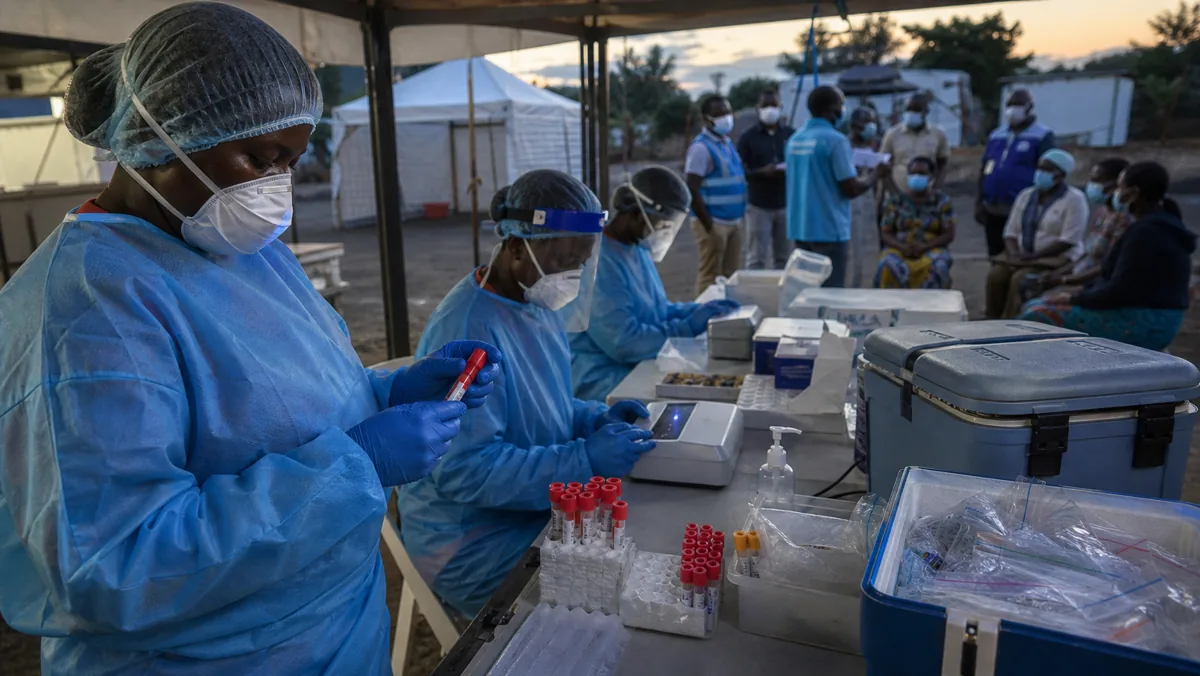
The World Health Organization reported on July 2, 2026 that it has added the first molecular diagnostic test for Bundibugyo virus disease to its Emergency Use List. The test detects genetic material of the virus in blood samples and should support rapid confirmation of infections. According to WHO, the authorization comes during the largest recorded outbreak of Ebola caused by Bundibugyo virus. WHO mentions 1406 laboratory-confirmed cases and 438 deaths for DR Congo alone. At the same time, according to WHO, laboratory capacity has been expanded from a limited number of locations in mainly Kinshasa and Goma, together accounting for an estimated 200 to 400 tests per day, to a network of 10 laboratories in affected provinces with more than 2,000 tests per day. On the same date, WHO also announced that the PARTNERS study has started to include patients to investigate whether MBP134, remdesivir or a combination thereof can improve survival in Bundibugyo virus disease. UN News adds the social layer on July 4: in Uganda, the response is also about fear, misinformation, stigma and safe return of people suspected of infection.
Own source research
MOZOM has broken down the WHO sources into three tiers. Layer one is diagnostics: the first Bundibugyo test on the Emergency Use Listing should give countries and UN buyers more guidance on quality choices. Tier two is clinical research: the PARTNERS platform study is testing MBP134 and remdesivir during the outbreak, with the possibility of adding treatments later. Layer three is social implementation: the UN News story from Uganda shows that anthropologists, surveillance teams and local conversations are needed to limit fear and stigma. MOZOM's own layer is that outbreak response only works when laboratory, clinic and community function simultaneously.
Striking in this message
It is striking that 'a test' sounds small, but in an outbreak it becomes an administrative instrument. A reliable test determines who is isolated, who is treated, which contacts are followed, which regions receive extra capacity and which fears in the community can be allayed. Diagnostics is therefore not an afterthought; it is the start of verifiable decision-making.
Less visible context
It is less visible that Bundibugyo virus disease is not a standard Ebola case. WHO emphasizes that there is not yet an approved treatment for this variant and that no treatment has been proven to work against all Ebola virus types. As a result, research during the outbreak takes on extra weight. At the same time, Ituri is located in a border region with Uganda and in an environment with conflict, trade and distrust. This makes surveillance and communication at least as important as laboratory capacity.
Possible message behind the news
One possible message is that outbreak control does not start with big words, but with practical links: testing capacity, treatment evidence and community conversations. The Sharper Reading: Even the best test loses power when people don't trust the response.
Neutral conclusion
The neutral conclusion: WHO has placed the first diagnostic test for Ebola Bundibugyo on the emergency list and at the same time treatment research is ongoing during the outbreak. The MOZOM lecture: this news is not just about laboratories, but about the question of whether science, healthcare logistics and trust can work together quickly enough to slow a cross-border Ebola outbreak.