
MOZOM-analyse
MOZOM analyses: WHO Western Pacific migration health, climate risk or healthcare access?
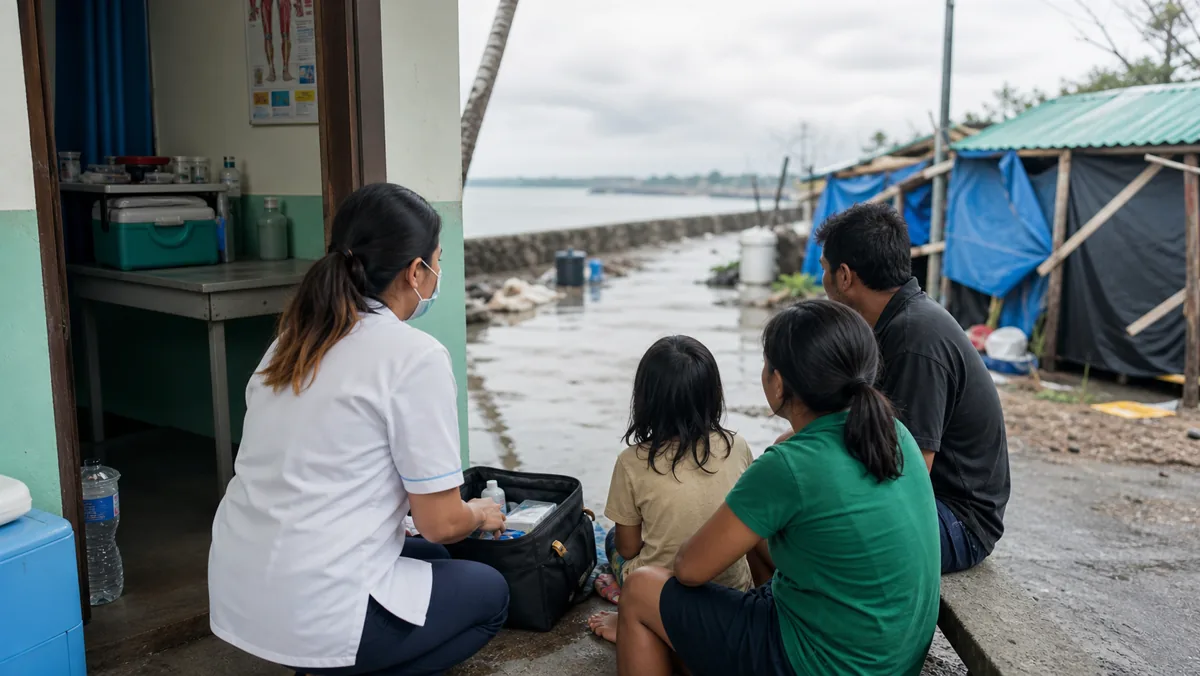
- Source
- WHO, WHO Western Pacific, Health and Migration Programme en WHO Global Research Agenda
- MOZOM headline
- MOZOM analyses: WHO Western Pacific migration health, climate risk or healthcare access?
- Original headline
- Launch webinar: Regional research agenda and action plan on health, migration and displacement in the WHO Western Pacific Region
- Author
- the MOZOM.nl editorial team
- Date
- 6 juli 2026 om 04:52
- Subject
- MOZOM explores why the WHO launch of a regional research agenda on health, migration, displacement and climate change in the Western Pacific is more newsworthy than a technical webinar might seem.
Summary of the original report
The World Health Organization will launch a regional research agenda and action plan on health, migration and displacement in the WHO Western Pacific Region on July 6, 2026, with a focus on climate change. According to the WHO, the region has a growing group of migrants and displaced persons whose health is shaped by social vulnerability and increasingly by climate hazards. According to the WHO, migration and displacement affect the social determinants of physical and mental health, access to care, continuity of services and general well-being. The new regional report of June 11, 2026 should help translate research priorities into policy and practice. The agenda identifies four core themes: inclusive universal health coverage and primary care, inclusion of migrants and displaced persons in emergency preparedness and response, multi-sectoral approach to health determinants, and health, migration and displacement in the context of climate change. The broader WHO climate publication of the same date places this globally: climate change is simultaneously a driver of migration, a cause of displacement and a determinant of health.
Own source research
MOZOM has placed four WHO layers next to each other. Layer one is the current launch on July 6: WHO wants to make the regional research agenda visible and get involved parties around the same evidence gaps. Layer two is the regional report: the four themes show that it is not only about clinical care, but also about emergency preparedness, social conditions and climate pressure. Layer three is the global climate publication: in it, climate migration shifts from a future scenario to a research and policy question for the entire migration journey. Layer four is the WHO progress report from March 2026: countries increasingly say that migrants and refugees count in policy, but data, training, emergency plans and participation are lagging behind. MOZOM's own layer is that 'care access' here does not just mean whether someone is allowed to enter a clinic. It also means whether the system can track someone when that person moves, becomes displaced, has no settled status, lives in a camp or informal neighborhood, or loses medical continuity after a climate disaster.
Striking in this message
It is striking that the WHO presents this as a research agenda, while the political core is much sharper. What is not measured quickly becomes invisible in policy. If migrants, refugees and internally displaced people are not included in health data, emergency plans and primary care, a country can make formal progress while vulnerable groups remain out of the picture in practice.
Less visible context
It is less visible that climate migration is not always a cross-border flight story. People may move within the same country, live temporarily with family, end up in informal settlements, seek seasonal work or stay in temporary shelters for months after a disaster. Health risks then shift: chronic medication runs out, pregnancy care is interrupted, mental stress increases, infection risks change and healthcare providers miss files. Therefore, the question is not just how many people migrate, but whether health systems are mobile enough to maintain continuity of care.
Possible message behind the news
A possible message is that universal care is only truly universal if people without a permanent place, permanent status or stable living environment are also included. The critical counter-reading is that research agendas only gain value when data, emergency plans and healthcare budgets actually change.
Neutral conclusion
The neutral conclusion: WHO will launch a regional research agenda on health, migration and displacement in the Western Pacific on July 6, 2026, with an emphasis on climate change. The sharper MOZOM lecture: this is not a small webinar message, but a warning that climate migration can also become a care continuity crisis if health systems cannot continue to monitor people on the move.
Source:
- WHO: launch webinar Regional research agenda and action plan, 6 July 2026
- WHO publication: Regional research agenda on health, migration and displacement in the Western Pacific Region
- WHO publication: Global research prioritization and action plan on health, migration and displacement in the context of climate change
- WHO: Refugee and migrant health topic page
- WHO: Encouraging progress in inclusive health policies for refugees and migrants