
MOZOM-analyse
MOZOM analyses: WHO hantavirus outbreak linked to Hondius contained, quarantine or travel risk?
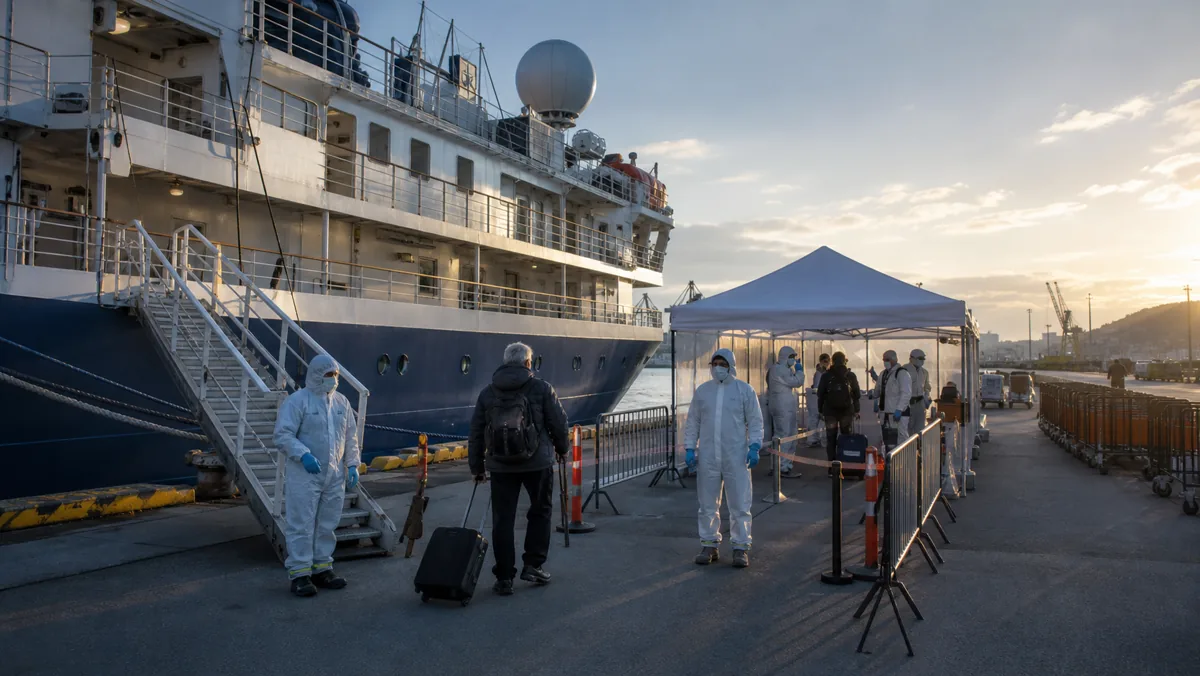
- Source
- WHO Disease Outbreak News, CDC, RIVM en ECDC
- MOZOM headline
- MOZOM analyses: WHO hantavirus outbreak linked to Hondius contained, quarantine or travel risk?
- Original headline
- WHO reports that Andean hantavirus outbreak around cruise ship M/V Hondius has been contained after 13 cases, 3 deaths and completed 42-day follow-up
- Author
- Ron Caroselli
- Date
- 5 juli 2026 om 18:38
- Subject
- MOZOM investigates why the WHO update on the M/V Hondius hantavirus outbreak remains newsworthy, even now that transmission has been interrupted according to health authorities.
Summary of the original report
The World Health Organization published its fifth Disease Outbreak News update on July 2, 2026, on the Andean hantavirus outbreak linked to cruise ship M/V Hondius. According to WHO, on May 2, 2026, the organization was informed through the UK International Health Regulations focal point of a cluster of severe acute respiratory complaints on board. As of July 2, 13 cases had been reported worldwide, including 12 laboratory-confirmed cases and 1 probable case. Three people have died, which equates to a case fatality ratio of 23 percent for this outbreak. Ten people have been admitted to hospitals; eight of them have recovered and been discharged, while two were still receiving medical treatment. WHO reports that all identified contacts have completed 42-day follow-up. Because no additional secondary cases were found, the WHO considers transmission to have been effectively interrupted and the outbreak to have been contained. CDC previously reported that exposed US citizens had completed their 42-day monitoring with no confirmed cases in the United States. RIVM reported for the Netherlands that passengers tested negative after quarantine. ECDC placed the outbreak in a European context: the Hondius had passengers and crew from 23 countries, including 9 EU/EEA countries.
Own source research
MOZOM has deliberately placed this message next to the older Dutch Radboud/quarantine article. That earlier article revolved around a local precaution without a chain of infection among hospital employees. The new WHO update concerns the international overall picture: 13 cases, 3 deaths, 42 days of follow-up and no further secondary transmission. The own MOZOM layer is in the timeline. A cluster was first reported via the International Health Regulations on May 2. This was followed by repatriation, quarantine, monitoring, hospital care and testing programs in several countries. Only after the incubation and follow-up period has passed can the message shift from risk to control. That makes the core not sensational, but administrative: outbreaks are stopped not only by medical knowledge, but by international logistics that can last long enough.
Striking in this message
It is striking how quickly two frames can collide. 'Cruise ship virus' sounds like travel itself is the problem. 'Outbreak contained' sounds as if the danger is over. Both are too simple. Above all, the Hondius case shows that modern travel routes immediately make medical events international. The real achievement is therefore not in panic or reassurance, but in following contacts until the end of the risk period.
Less visible context
Less visible is that a 42-day follow-up is socially and practically difficult. People must stay at home or remain under surveillance, health services must maintain contact, laboratories must process tests and countries must share information without damaging privacy and trust. For authorities, that's a balance: overreacting can miss a rare chain of transmission, and overreacting can cause unnecessary fear and travel stigma. This outbreak shows that health surveillance after international travel is not only medical, but also organizational, legal and communication.
Possible message behind the news
One possible message is that international health surveillance works when countries report quickly, track contacts and wait for the end of the risk period. The critical counter-reading is that such certainty only arises afterwards, after travelers, hospitals and health services have had to maintain discipline for weeks.
Neutral conclusion
The neutral conclusion: WHO considers the M/V Hondius outbreak contained after all known contacts completed 42-day follow-up with no new secondary cases. The sharper MOZOM reading: this is not a panic story and not a simple reassuring message. It is an example of how rare infection risks in a traveling world only remain small when medical alertness and international logistics meet in time.
Source:
- WHO Disease Outbreak News: Hantavirus outbreak linked to cruise ship travel, Multi-locations
- CDC: Andes Virus Outbreak on a Cruise Ship, current situation
- RIVM: Actualiteiten over hantavirus en m/v Hondius
- ECDC: Andes hantavirus outbreak in cruise ship
- ECDC: Questions and answers on the hantavirus outbreak in a cruise ship