MOZOM-analyse
WHO: cancer towards 2050, almost 35 million diagnoses or care gap?
- Source
- WHO, IARC Global Cancer Observatory en WHO Global Status Report on Cancer 2026
- MOZOM headline
- WHO: cancer towards 2050, almost 35 million diagnoses or care gap?
- Original headline
- WHO calls for urgent action as new cancer cases are projected to nearly double by 2050
- Author
- Ron Caroselli
- Date
- 9 juli 2026 om 19:59
- Subject
- MOZOM investigates why the WHO projection of almost 35 million new cancer cases in 2050 is not only a medical alarm signal, but also a test for prevention, screening, affordable medicines and global healthcare inequality.
Summary of the original report
The WHO warns on July 8, 2026 that new cancer cases could almost double by 2050. The organization bases itself on the Global Status Report on Cancer 2026, which was drawn up together with the International Agency for Research on Cancer. The primary figures are sharp: approximately 20.6 million new cases per year, almost 10 million deaths per year and a projection of almost 35 million new cases in 2050. The WHO also points to progress: tobacco use has fallen by 27 percent since 2010, 82 percent of countries now have a national cancer plan and vaccination and better infection prevention are reducing some infection-related cancers. But the gap remains wide. For breast cancer, the WHO cites a five-year survival rate of 87 percent in high-income countries compared to about 42 percent in low-income countries. Less than a third of countries fully include cancer care in universal health coverage packages. So the warning is not only that cancer is becoming more common, but that the outcome increasingly depends on where someone lives.
Own source research
MOZOM has converted the WHO warning and compared it to the inequality indicators. From 20.6 million to almost 35 million new cases means an increase of approximately 14.4 million diagnoses per year. That's about 70 percent growth over current levels. The word 'almost double' is therefore journalistically understandable, but arithmetic it is not exactly times two. MOZOM's own layer consists of the combination of three figures: 20.6 million new cases, almost 10 million deaths and 87 percent versus 42 percent five-year survival for breast cancer, depending on income level. Together they show that the core is not just cancer anymore. The key is who is found in time, who is treated and who appears in statistics mainly as a late discovered or untreated patient.
Striking in this message
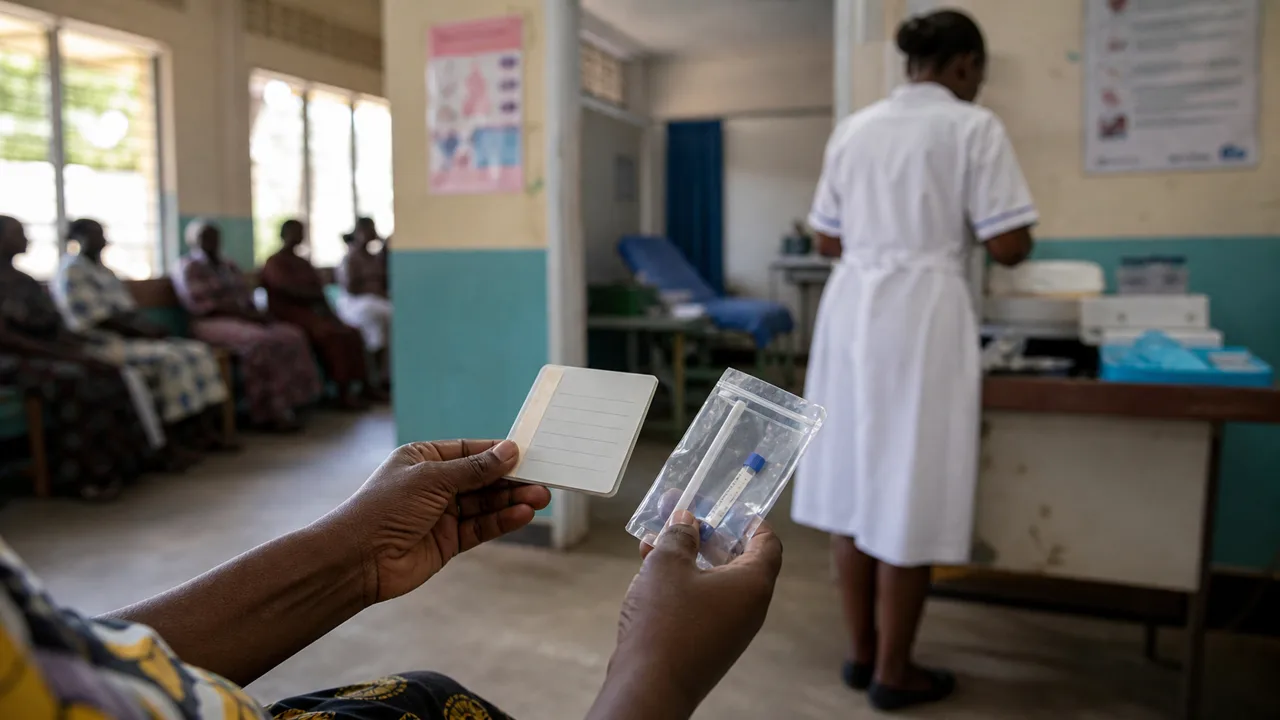
It is striking that cancer is often framed as a medical innovation question: better medicines, better trials, better technology. That low is real, but the WHO figures show that the first gains are often simpler and more political: reducing tobacco, HPV and hepatitis vaccination, limiting air pollution, organizing screening, paying for basic treatment and making essential medicines available. The most advanced therapy is of little help if the diagnosis is late or the health system cannot support the treatment.
Less visible context
It is less visible that an increase in cancer diagnoses is also partly due to demographics: people are getting older and populations are growing. But that doesn't make the problem any smaller. Precisely because cancer is increasingly becoming a chronic and long-term care chain, the pressure shifts to general practitioners, laboratories, hospitals, informal care, insurance and government budgets. The question behind the WHO message is therefore not only how much cancer will develop, but what part of it will remain preventable, detectable early or treatable.
Possible message behind the news
A possible message is that the world should expect more cancer diagnoses due to growth, aging and lifestyle risks. The sharper MOZOM reading: the biggest gap is not just in the number of cases, but in access to simple prevention, early detection and affordable treatment.
Neutral conclusion
The neutral conclusion: WHO and IARC warn that without additional action, new cancer cases could rise to almost 35 million per year by 2050. The MOZOM conclusion: the most important question is not only whether cancer occurs more often, but whether countries organize the healthcare chain in such a way that survival no longer depends so much on income and place of birth.