
MOZOM-analyse
MOZOM analyses: Afghanistan return crisis, 2.7 million returnees or new displacement?
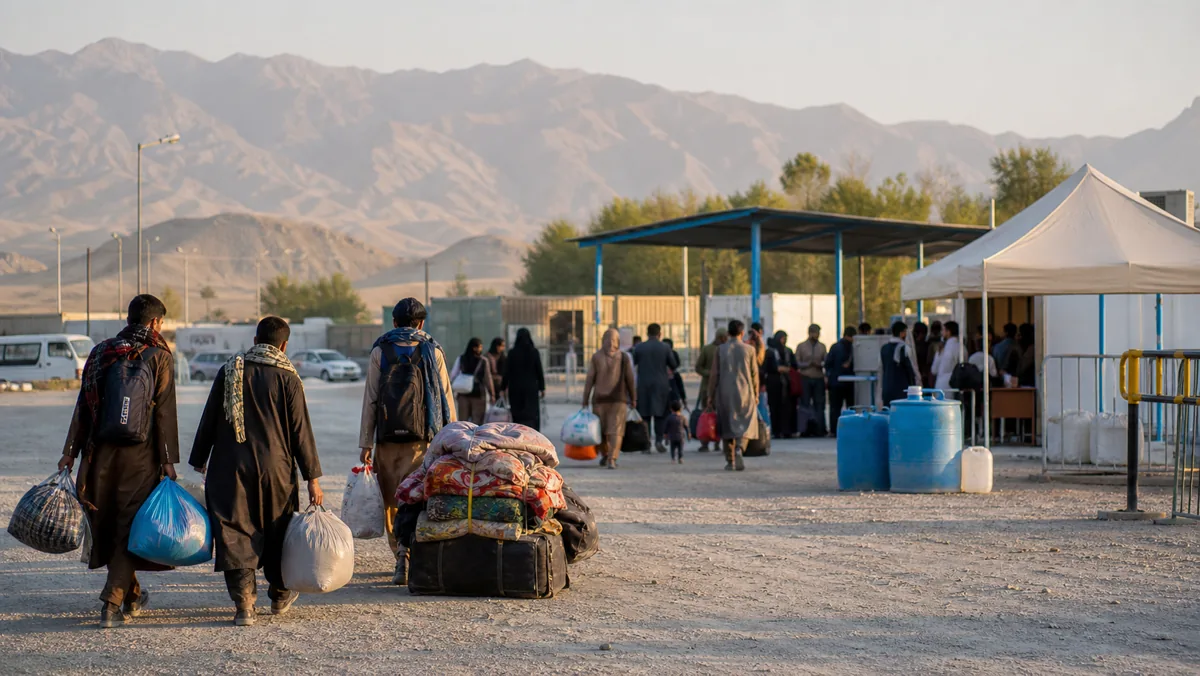
- Source
- UN News, UNDP Afghanistan Socioeconomic Review, OCHA Humanitarian Action en UNHCR Operational Data Portal
- MOZOM headline
- MOZOM analyses: Afghanistan return crisis, 2.7 million returnees or new displacement?
- Original headline
- Afghanistan among the world's largest displacement crises
- Author
- the MOZOM.nl editorial team
- Date
- 7 juli 2026 om 00:40
- Subject
- MOZOM investigates why the new UN warning about Afghanistan is not just about refugees, but about the question of whether mass returns to a poor, dry and limited country can be restored or cause new displacement.
Summary of the original report
UN News reported on July 6, 2026 that Afghanistan is among the world's largest displacement crises. According to the UN layer behind the message, four factors are pressing on the country at the same time: four decades of war, a fragile economy, drought and earthquakes, plus mass returns from Iran and Pakistan. UN News mentions 2.7 million returnees and refers to the UNDP analysis that 74 percent of the population, about 29 million people, cannot meet basic needs. The current UNHCR data makes the flow more concrete: up to June 27, 2026, IOM and UNHCR registered 892,120 total returns to Afghanistan in 2026, of which more than 531,800 from Pakistan and 358,800 from Iran. Within this number, 353,620 deportations were registered. OCHA places the crisis even more broadly: 21.9 million people in Afghanistan are seen as in need of assistance by 2026. This means that return is not automatic recovery. It is a pressure test for water, housing, work, documentation, healthcare, protection and local stability.
Own source research
MOZOM has placed four UN layers next to each other. Layer one is the news of July 6: Afghanistan is described by UN News as one of the largest displacement crises. Layer two is UNDP: the return is not economically neutral, as almost five million people have returned since 2023 while three in four Afghans could not meet their basic needs in 2025. Layer three is OCHA: Afghanistan will remain a structural humanitarian crisis in 2026 with 21.9 million people in need of assistance and pressure on food, protection, water and health. Layer four is UNHCR/IOM data: in 2026 alone, 892,120 returns were registered at the end of June, including 353,620 deportations. MOZOM's own layer is that 'return' here is not a completed policy result, but a transfer of pressure to villages, border provinces and families that often have no buffer.
Striking in this message
The word return is striking. That sounds administratively clean: someone leaves country A and arrives in country B. But the UN figures show that return only becomes meaningful if there is land, water, work, documents, care, education and protection. Without these conditions, return can turn into secondary displacement: people formally return home, but then have to move again because surviving locally is not possible.
Less visible context
What is less visible is that Afghanistan not only receives returnees, but also bears damage from drought, earthquakes, poverty, mines and rights restrictions. OCHA describes food insecurity, malnutrition and explosive remnants of war as ongoing pressures. UNDP mentions the closure or limitation of more than 440 healthcare locations due to funding shortages and points to declining access to sufficient drinking water. That sharpens the question: how much return can an area handle before aid, local economy and social relations collapse?
Possible message behind the news
A possible message is that migration policy does not end with closing a border or organizing returns. The sharper reading: if receiving areas lack basic services, return can be a statistical success for the country of departure and at the same time a new crisis for the country of arrival.
Neutral conclusion
The neutral conclusion: UN sources warn that Afghanistan will remain one of the world's biggest displacement and return crises by 2026. The MOZOM lecture: return here is not a simple answer to migration, but a test of whether an impoverished and drought-stricken country can absorb millions of people without producing new displacement.