
MOZOM-analyse
MOZOM analyses: Ireland's asylum policy, reception crisis or loss of administrative control?
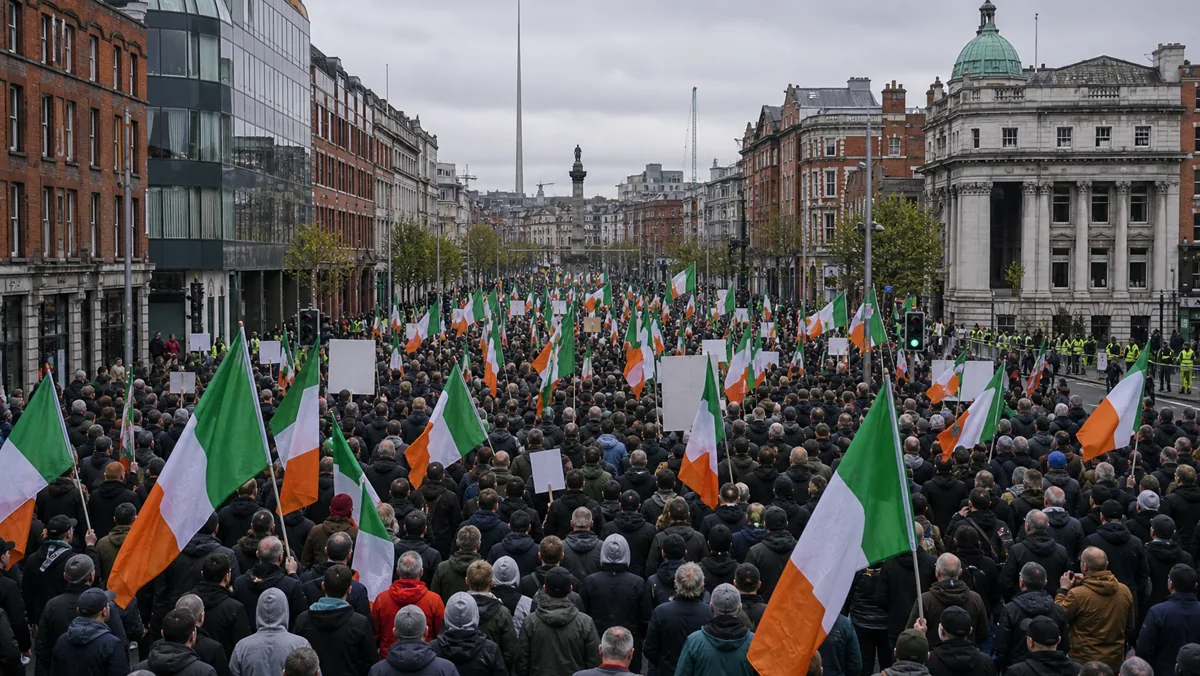
- Source
- IPAS, International Protection Office, Department of Justice, RTE, TheJournal.ie, Irish Times en ECRE/AIDA
- MOZOM headline
- MOZOM analyses: Ireland's asylum policy, reception crisis or loss of administrative control?
- Original headline
- Irish asylum reception facilities remain under pressure while protests, violence around locations and stricter procedures reinforce each other
- Author
- the MOZOM.nl editorial team
- Date
- 4 juli 2026 om 21:47
- Subject
- MOZOM investigates why the Irish asylum debate is not just about numbers, but about reception capacity, housing shortage, local communication, violence around locations, online mobilization and the Irish government's attempt to regain control through stricter procedures.
Summary of the original report
In the weekly report with data up to June 7, 2026, the Irish reception service IPAS reported a total of 33,068 International Protection applicants in reception, of whom 9,899 were children. For comparison: according to the same IPAS trend series, at the end of 2021 there were 7,244 people, at the end of 2022 this was 19,104, at the end of 2023 this was 26,279 and at the end of 2024 it was 32,702. The increase is therefore not just a political feeling, but a measurable pressure on shelters, municipalities and housing. At the same time, the government is trying to tighten the system. The International Protection Act 2026 entered into force on June 12, 2026 and must, among other things, implement the EU Migration and Asylum Pact, with faster procedures, a border procedure and stricter decision periods. But the social crisis has not disappeared. RTE reported an attack on a Dublin 8 center housing around 20 asylum seekers. TheJournal.ie reported that the government dropped plans for a shelter at the former Crown Paints site in Coolock after months of protests and violence. The core of the problem is therefore twofold: the numbers and procedures are under pressure, but especially the form of reception, choice of location and communication have damaged local trust.
Own source research
MOZOM has placed four layers next to each other. Layer one is the number layer: IPAS registered 33,068 residents in shelter on June 7, 2026, almost five times as many as at the end of 2021. Layer two is the space layer: shelter often takes place in hotels, emergency locations, former buildings and centers that are visibly located in neighborhoods where housing shortages and facilities stress already exist. Layer three is the protest layer: RTE, TheJournal.ie and Irish Times show that locations such as Coolock and Dublin 8 not only provoked discussion, but also violence, fires or attacks around shelters. Layer four is the policy layer: the International Protection Act 2026 attempts to make the inflow and flow more manageable through faster procedures and EU pact rules. MOZOM's own layer is that Ireland mainly has a crisis of support. Not every critic is violent and not every asylum seeker is a problem, but a state that is forced to organize reception as emergency logistics turns every choice of location into a political flash point.
Striking in this message
It is striking that the Irish debate often breaks down into two caricatures. On the one hand is the frame that protest is mainly extreme right-wing, racist or incited online. On the other side is the frame that the state overruns communities without a mandate. Both frames are missing something. There have been real incidents of violence and intimidation around reception locations; that must be stated clearly. But there is also real pressure on homes, hotels, local amenities and trust. Anyone who waves away that second layer actually allows the first layer to grow.
Less visible context
Less visible is the distinction between the Republic of Ireland and Northern Ireland. Northern Ireland is part of the United Kingdom and has its own political and legal relationships. Yet the border indirectly returns to the debate, because the Common Travel Area, migration routes and British-Irish agreements can shift political pressure. This article focuses on the Republic of Ireland: IPAS, the Irish government, Irish reception locations and Irish asylum law. Northern Irish riots or British rules should not simply be read as Irish policy.
Possible message behind the news
One possible message is that Ireland is finally trying to bring order to an overburdened asylum system. The critical counter-reading is that the government first allowed years of emergency shelter, hotels and unclear location choices to pile up and is now trying to restore what has already cost political trust with faster procedures.
Neutral conclusion
The neutral conclusion: Ireland has a real asylum and reception pressure, demonstrable in IPAS figures, and the government has tightened the policy in 2026. The sharper MOZOM reading is that the real crisis is not just in the inflow, but in administrative control. When shelter logistics, housing shortages and local communication fail, policy shifts to street politics. Then every hotel, every vacant building and every emergency location becomes a referendum on confidence in the state.
Source:
- IPAS: Weekly Accommodation and Arrivals Statistics, data 7 juni 2026
- Gov.ie: IPAS statistics 2004 to 2026
- International Protection Office: monthly statistics
- Gov.ie: commencement of the International Protection Act 2026
- RTE: centre housing around 20 International Protection applicants in Dublin attacked
- RTE Prime Time: mapped fires linked to accommodation for migrants
- TheJournal.ie: government drops plan for former Crown Paints site in Coolock
- TheJournal.ie: drop in international protection applications and pressure on the system
- Irish Times: more than 1,000 protest outside Coolock factory
- ECRE/AIDA: country report on Ireland, update on 2025