
MOZOM-analyse
MOZOM analyses: AI companies emptying antique shops, model training or silent culture theft?
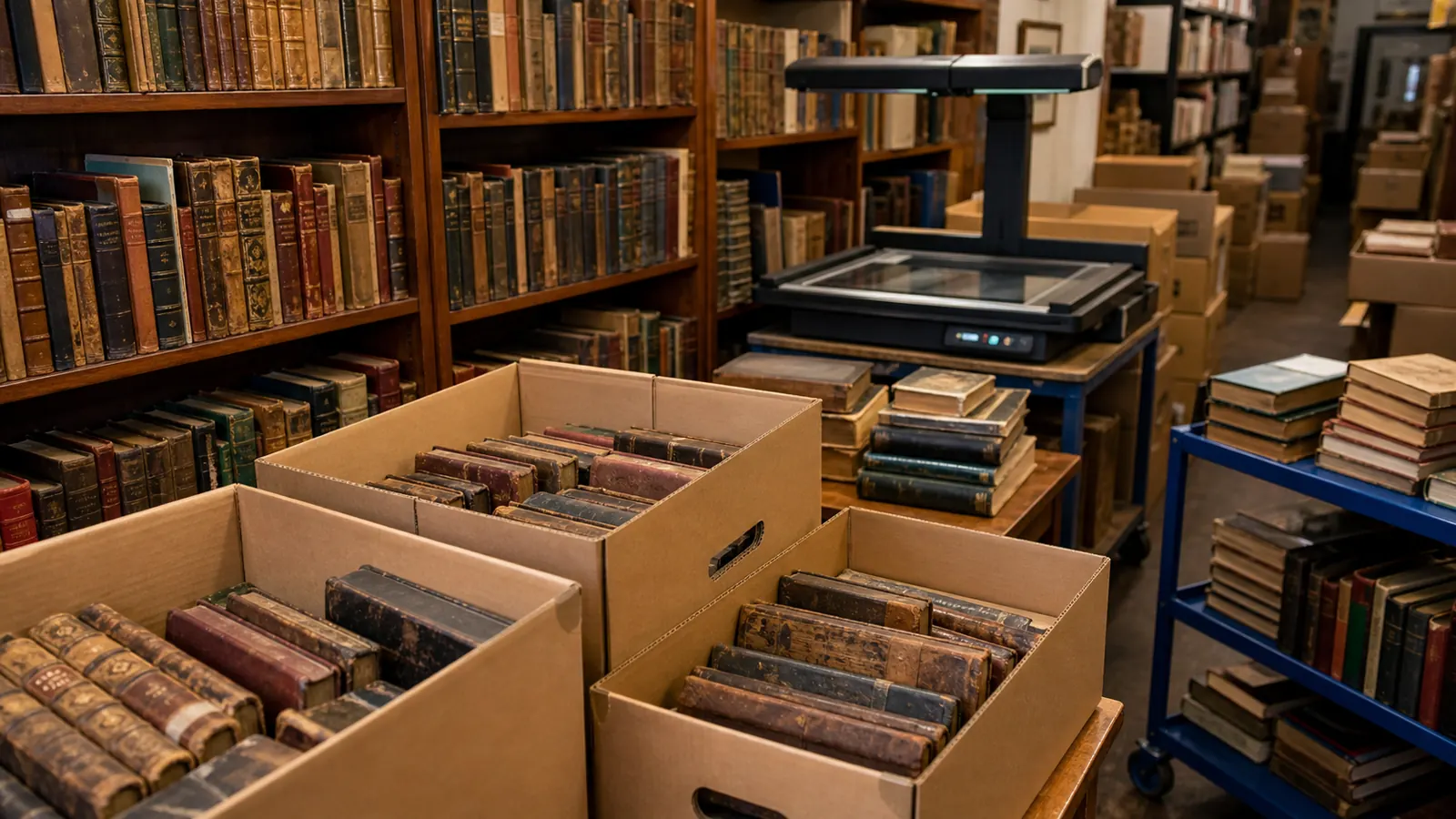
- Source
- Tagesschau, NDR, SWR, Boersenblatt, Urheberrechtsgesetz en Bartz v. Anthropic
- MOZOM headline
- MOZOM analyses: AI companies emptying antique shops, model training or silent culture theft?
- Original headline
- German antiquarian book dealers report massive book purchases that are probably related to AI training
- Author
- Ron Caroselli
- Date
- 4 juli 2026 om 15:23
- Subject
- MOZOM investigates how massive purchases of antiquarian books by or on behalf of AI companies touch the line between legal purchasing, text-and-data mining, cultural preservation and private data hunger.
Summary of the original report
German media report that antiquarian bookstores receive remarkably large orders for older, often difficult to obtain books. According to Tagesschau, NDR, SWR and Boersenblatt, booksellers suspect that companies or middlemen are purchasing these titles to scan them for AI training. These are books that are not available digitally everywhere and can therefore be valuable for language models that want to include more variation, older style, specialist knowledge or non-mainstream text. Legally the situation is less simple than 'bought a book, so anything goes'. In Germany, section 44b Urheberrechtsgesetz regulates text-and-data-mining, including room for reservation of rights. In the United States, the judge in Bartz v. Anthropic in 2025 partly ruled in favor of Anthropic about fair use in training and in digitizing purchased print books, but piracy and central library copies remained another problem. That is exactly what makes the current purchasing wave meaningful: physical purchase can become a legal route to make data hunger seem neater.
Own source research
MOZOM has placed four layers next to each other. Layer one: the market layer. Antiquarian books are scarce, scattered and often not digitally accessible; that is precisely why they are interesting for model training. Layer two: the legal layer. Buying a book changes the evidence position, but does not automatically solve copyright, opt-out, reuse or destruction after scanning. Layer three: the culture layer. Antique stores are not ordinary warehouses; they preserve fringes of language, regional editions, small print runs and forgotten knowledge. Layer four: the power layer. AI companies can use a lot of money to pull material from a fragile market in a short time. MOZOM's own layer is that this is not neutral digitization. It is extraction: culture is not only read, but converted into private computing power.
Striking in this message
It is striking how friendly words such as scanning, training and digitizing sound. They suggest conservation and progress. But if a book disappears from the reading market after purchase, is possibly cut loose or only serves as training material, this is not a normal library function. Then a culture carrier becomes a raw material. The question is not only whether AI is allowed to learn something, but who decides which books disappear from public circulation to make machines better.
Less visible context
What is less visible is that not all old books are replaceable. Some titles have small print runs, personal notes, regional distribution, or historical printing history. An AI company can treat them as text containers, while an antique dealer, researcher or reader also sees them as objects with context. Moreover, the reward shifts. The buyer pays the antique dealer, but the author, heirs, publisher or public knowledge space often receive nothing when the content is later used in a commercial model.
Possible message behind the news
A possible message is that AI gives new life to old knowledge. The critical counter-reading is that old knowledge is mainly absorbed by companies that use it to improve closed models.
Neutral conclusion
The neutral conclusion: German antiquarian bookstores report striking bulk orders that are probably related to AI training, while the legal route via purchased books may be less vulnerable than piracy. The more pointed MOZOM reading is that this shows exactly how AI power works. Not only is the internet being scraped clean, the forgotten shelf in the antiquarian bookstore also becomes interesting as soon as language becomes a raw material. Then the democratic question is simple: will culture remain available to people, or will it disappear into models that we only see as a paid service?
Source:
- Tagesschau: KI-Firmen kaufen offenbar Antiquariate leer
- NDR: alte Buchschaetze ploetzlich gefragt
- SWR: Kaufen KI-Firmen massenhaft Antiquariatsbuecher auf?
- Boersenblatt: US-Firmen kaufen massenhaft antiquarische Buecher fuers KI-Training
- Urheberrechtsgesetz paragraaf 44b: Text und Data Mining
- Bartz v. Anthropic: order on fair use and infringement, 23 juni 2025