
MOZOM-analyse
Journalism should inform, not shield
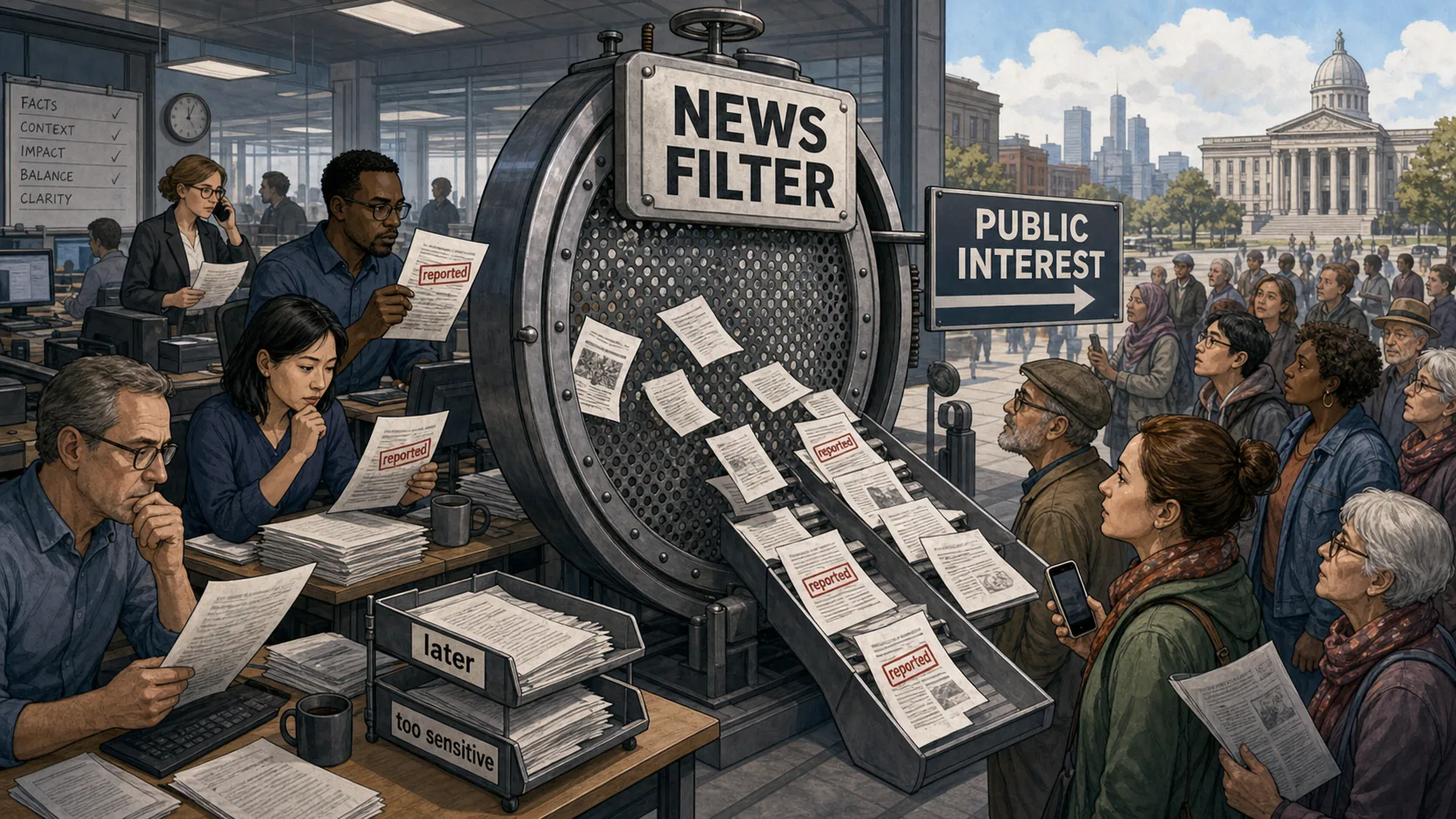
- Source
- SPJ, Reuters Trust Principles, BBC Editorial Guidelines, The New York Times/Iraq-context, Rotherham inquiry, Washington Post, PBS, Meta/Facebook-context, WHO, DOJ, AP en House Oversight
- MOZOM headline
- Journalism should inform, not shield
- Original headline
- When news selection turns into protection against unwanted information
- Author
- Ron Caroselli
- Date
- 27 juli 2026 om 00:20
- Subject
- MOZOM investigates when journalistic selection is necessary and when that selection turns into shielding relevant perspectives, files or doubts.
Summary of the original report
The core of journalism is not that the media protects citizens against incorrect opinions. The core is that they check facts, question power, show context and let the reader weigh in for themselves. This standard is also included in classic journalistic codes: seek the truth, be independent, show relevant context and prevent the choice of source from determining the outcome. Yet there are examples worldwide in which dominant media or platforms later had to acknowledge that a subject was treated too narrowly, too late or too dismissively: Iraq and weapons of mass destruction, Rotherham and grooming gangs, the Hunter Biden laptop, the lab leak debate around Covid-19 and the Epstein files. Each example is different, but the mechanism is similar: a subject is first put through a filter that works not only factually but also politically, morally or institutionally.
Own source research: five examples of information that became visible late
The Iraq WMD file is the classic example of too little contradiction in the face of official power. American and British claims about weapons of mass destruction were given great weight; later the substantiation turned out to be seriously flawed. The New York Times published an editor's note about inadequate reporting. At Rotherham, an official investigation showed that authorities failed for years around child sexual abuse, partly because sensitive aspects such as ethnicity and fear of racism could paralyze action. The Hunter Biden laptop saw a politically charged story limited by platforms in 2020; later, Washington Post journalists, among others, concluded that parts of the material could be determined to be authentic, without making every claim in the story true. In the Covid lab leak debate, hypotheses about a laboratory origin were often initially treated as a conspiracy or prohibited claim; later the hypothesis was discussed again in official and journalistic analyses. With Epstein it is not about one proven hidden list, but about the public distrust that arises when files, names, redactions and official denials follow each other for years.
From caution to pre-selection
The word 'caution' sounds journalistically responsible. It means: no unproven claims, no names without basis, no panic. But caution can also turn into pre-selection. Then the reader is not told: we know this, we do not know this and this is disputed. The reader is then mainly told which interpretation is professional, safe or morally acceptable. It is precisely at that point that journalism changes from informing to shielding.
Why Epstein fits into this debate
Epstein is a striking example because, by its nature, the subject quickly derails into speculation. Not every claim about a 'client list' has been proven. The DOJ and FBI stated that no incriminating client list had been found. At the same time, it is socially understandable that citizens demand more transparency: there are convictions, victims, powerful networks, partially released files and a lot of editing. When authorities say that nothing relevant is left behind, but at the same time allow large parts of the material to become available, selectively or with black bars, an information gap arises. Journalism should not fill that hole with fantasy, nor should it be filled with reassurance.
Possible message behind the news
The visible message of classic journalism is: we filter so that you receive reliable information. The critical counter question is: who controls the filter itself? The MOZOM lecture is that journalism only deserves trust when it not only corrects incorrect claims, but also openly identifies its own blind spots, late recognitions and missed perspectives.
Neutral conclusion
Journalism should inform, not shield. That doesn't mean that editors have to publish every rumor or give equal weight to every political voice. It does mean that they must keep their selection visible, verifiable and correctable. As soon as the media mainly deals with sensitive topics by protecting the reader from them, journalism shifts from public control to norm control. Citizens do not need an information guardian, but need facts, context and the right to weigh themselves.
Source:
- SPJ Code of Ethics: seek truth and report it
- Reuters Trust Principles
- BBC Editorial Guidelines: impartiality
- The New York Times: editors' note on Iraq/WMD coverage
- US Senate Intelligence Committee: prewar Iraq intelligence reports
- Rotherham Council: independent inquiry into child sexual exploitation
- PBS: former Twitter executives on blocking the Hunter Biden laptop story
- The Washington Post: review of Hunter Biden laptop data
- The Guardian: Facebook lifts ban on posts claiming Covid-19 was man-made
- WHO: Covid-19 origins investigation
- DOJ: Epstein files release portal
- AP: DOJ/FBI memo says no Epstein client list was found
- House Oversight Committee: Epstein document releases