
MOZOM-analyse
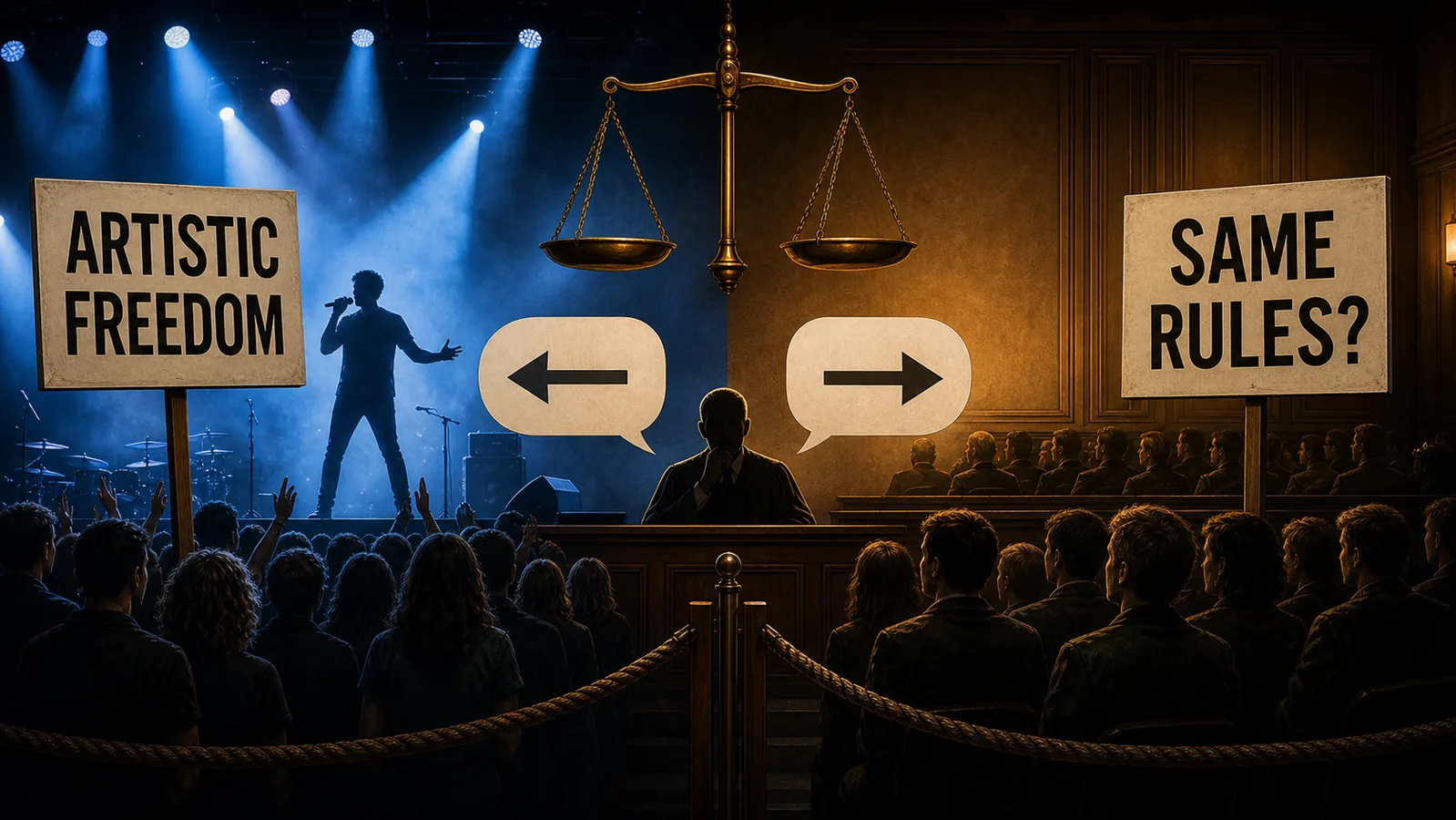
White men to the back: artistic freedom or discrimination from the right political camp?
- Source
- NOS, Discriminatie.nl, RTL/ANP, Unia, Wetboek van Strafrecht, Algemene wet gelijke behandeling en Europees mensenrechtenrecht
- MOZOM headline
- White men to the back: artistic freedom or discrimination from the right political camp?
- Original headline
- Analysis of the Sophie Straat ruling, reporting center assessment and the question of whether artistic freedom is applied in a politically neutral manner
- Author
- Paul Giezen
- Date
- 23 juli 2026 om 13:00
- Subject
- MOZOM investigates whether the call for 'white men to the back' is legal discrimination, why hotlines do not assess it that way and whether the same artistic-political freedom would also apply to a reverse political message.
Summary of the original report
According to NOS, performances by Sophie Straat provoked discussion because she wanted to make space for women, queer people and people of color, where white men were asked to the back. Discriminatie.nl received many reports, but according to reports it does not see sufficient grounds to speak of prohibited discrimination. A similar line also emerges from the Belgian context around Unia: the expression is mainly assessed as a short, context-bound artistic-political action and not as a structural refusal of access. That probably makes the matter legally difficult. But socially the double standard question remains: would a right-wing artist who uses the same form, but with an inverted target group, also fall under the same artistic freedom?
Own source research
MOZOM places three legal layers next to each other. First layer: access and services. If visitors are truly excluded from a concert, trade, service or publicly accessible place on the basis of race or gender, the matter becomes more serious. In this case, reporting points point out that it was not a general access policy. Second layer: criminal group insult. Article 137c of the Criminal Code requires more than just a blunt distinction; the statement must be insulting to a group due to, among other things, race. Third layer: incitement to discrimination. Article 137d of the Criminal Code may seem more relevant because the statement contains a call for behavior. Yet the context remains important: short stage action, political message, no call to hatred or violence and no lasting exclusion. MOZOM's own test is therefore the opposite test: if a right-wing artist were to take a comparable artistic-political action with another protected group as the target, would reporting centers and media look equally broadly at context, art and political expression?
Artistic freedom as a shield
Artistic freedom is a strong shield. That's how it should be. Art and politics may grate, offend, exaggerate and be uncomfortable. European human rights law also protects expressions that shock, disturb or annoy. But a shield becomes problematic when it is only extended broadly to one political direction. Then artistic freedom changes from a general legal principle into a cultural right of preference.
Less visible context
The agenda question is less visible. Sophie Straat is placed in an activist, feminist and anti-racist context by many media. Within that context, the call is more likely to be read as a correction to existing power relations, not as discrimination. That can be legally relevant, because context really counts. But the same context approach can also become ideological. Anyone who says that a left-wing stage action is less likely to be discriminatory because of its purpose must explain why a right-wing stage action does not deserve the same artistic-political protection as soon as it is presented as symbolic or corrective within its own worldview.
Possible message behind the news
The visible message is: a provocative festival action is not prohibited discrimination. The critical MOZOM reading is: that conclusion is only convincing if the same broad protection also applies to a reverse, politically uncomfortable artistic action.
Neutral conclusion
The conclusion is not that Sophie Straat has acted criminally according to public information. The legal bar is high for this and the context is important. The more stark conclusion is that this case is a stress test for neutrality. Artistic and political freedom are only real freedoms when they do not depend on the sender, the agenda or the movement within which the message fits. If 'backward' in this context is not discrimination, it must be clearly explained which legal limit does apply and whether that limit is also applied in exactly the same way when a right-wing artist reverses direction.
Source:
- NOS: 'Witte mannen naar achteren' van Sophie Straat geen discriminatie, vinden meldpunten
- Discriminatie.nl: meldingen over Sophie Straat
- RTL/ANP: meldpunt ziet geen discriminatie in uitspraak Sophie Straat
- Unia: discriminatie begrijpen
- Wetboek van Strafrecht: artikel 137c groepsbelediging
- Wetboek van Strafrecht: artikel 137d aanzetten tot haat, discriminatie of geweld
- Algemene wet gelijke behandeling
- Europees Verdrag voor de Rechten van de Mens: artikel 10 vrijheid van meningsuiting